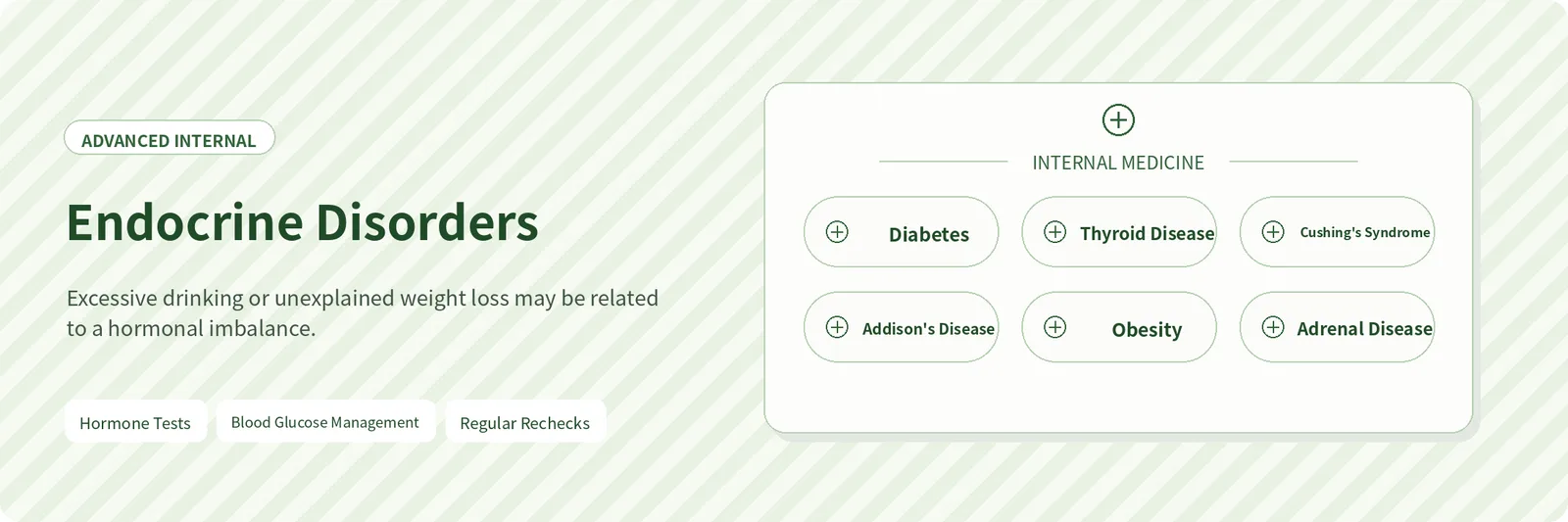
Endocrine Disorders
Drinking more water and losing weight? It's time to check hormone balance.
Signs to watch for
- Noticeably increased drinking and urination
- Losing weight despite a good appetite
- Thinning skin and symmetrical hair loss
- Pot-bellied appearance and reduced energy
- Repeated lethargy and vomiting
* In cats, hyperthyroidism can paradoxically look like increased activity.
What causes it?
Diabetes mellitus
Insulin, which controls blood sugar, is insufficient or not working properly — like a key (insulin) that no longer fits the lock (cells), so energy cannot enter.
Cushing's syndrome (hyperadrenocorticism)
Excessive stress hormone (cortisol) production. The body stays in constant emergency mode, straining the skin, liver, and muscles.
Thyroid disease
The thyroid — the body's engine throttle — produces too much hormone (hyperthyroidism, common in cats) or too little (hypothyroidism, common in dogs).
How we diagnose & treat
- 1
Step 1. History & physical exam
We review changes in water intake, appetite, weight, and skin condition.
- 2
Step 2. Baseline blood & urine tests
Blood glucose, liver and kidney values, urine specific gravity, and urine glucose.
- 3
Step 3. Hormone testing
Cortisol, thyroid hormone, and other targeted tests based on the suspected condition.
- 4
Step 4. Imaging
Ultrasound of the adrenal glands, pancreas, and thyroid area when needed.
- 5
Step 5. Long-term care plan
Medication dose adjustment and a regular monitoring schedule.
Key conditions
- Diabetes mellitus
- Cushing's syndrome
- Hypothyroidism
- Hyperthyroidism
- Addison's disease
- Concurrent pancreatitis care
FAQ
Most dogs need ongoing insulin management. In cats, stabilizing blood sugar early sometimes allows insulin to be reduced or discontinued, which is why early management matters.
Contact Us
Ask us about these symptoms
10:00 AM – 9:00 PM · Closed Tuesdays (Open weekends)