Kidney Disease
Kidneys fail quietly. Protect them before the numbers rise.
Signs to watch for
- Drinking more water and urinating more
- Reduced appetite and weight loss
- Frequent vomiting and worsening bad breath
- Dull coat and low energy
- Urine color has become pale
* Chronic kidney disease is very common in cats. For cats over 7, we recommend regular screening even without symptoms.
What causes it?
Chronic kidney disease (CKD)
The kidneys are like the filter of a water purifier. Even as the filter slowly clogs, the remaining part compensates — so nothing shows on the outside until much of the function is lost.
Acute kidney injury
Sudden kidney damage from toxins (lilies, grapes, certain medications), dehydration, or urinary obstruction. Rapid treatment determines the chance of recovery.
Spread from urinary tract disease
Repeated cystitis or stones can eventually affect the kidneys. Lower urinary tract problems need to be managed together.
How we diagnose & treat
- 1
Step 1. History & physical exam
We check changes in drinking and urination, weight trends, and hydration status.
- 2
Step 2. Blood tests
Kidney values (creatinine, BUN, SDMA), electrolytes, and anemia screening.
- 3
Step 3. Urine & blood pressure tests
Urine concentration, protein loss, and blood pressure to determine the disease stage.
- 4
Step 4. Imaging
Ultrasound to assess kidney size, structure, and stones.
- 5
Step 5. Stage-based management
Diet, fluids, and medication planned by IRIS stage with regular follow-up.
Key conditions
- Chronic kidney disease (CKD)
- Acute kidney injury
- Kidney stones
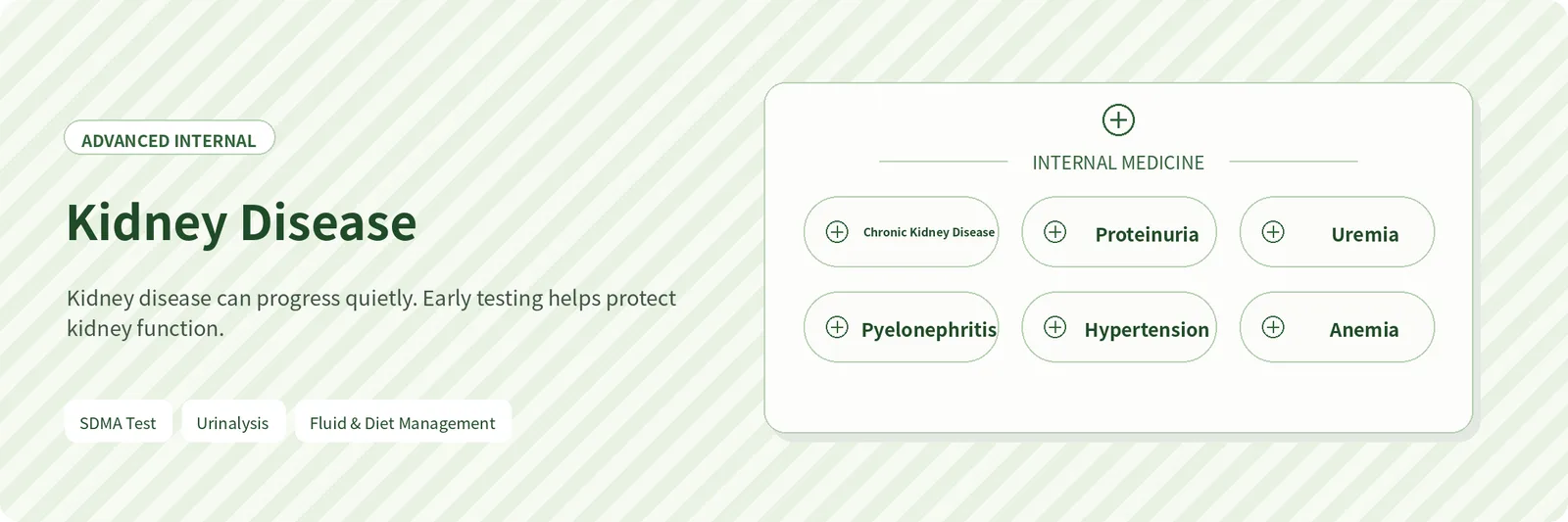
- Proteinuria
- Concurrent hypertension care
- Urinary obstruction
FAQ
Damaged kidney tissue rarely recovers, but protecting the remaining function for as long as possible is achievable. Dietary management and regular testing to slow progression are the core of treatment.
Contact Us
Ask us about these symptoms
10:00 AM – 9:00 PM · Closed Tuesdays (Open weekends)