Skin & Allergy
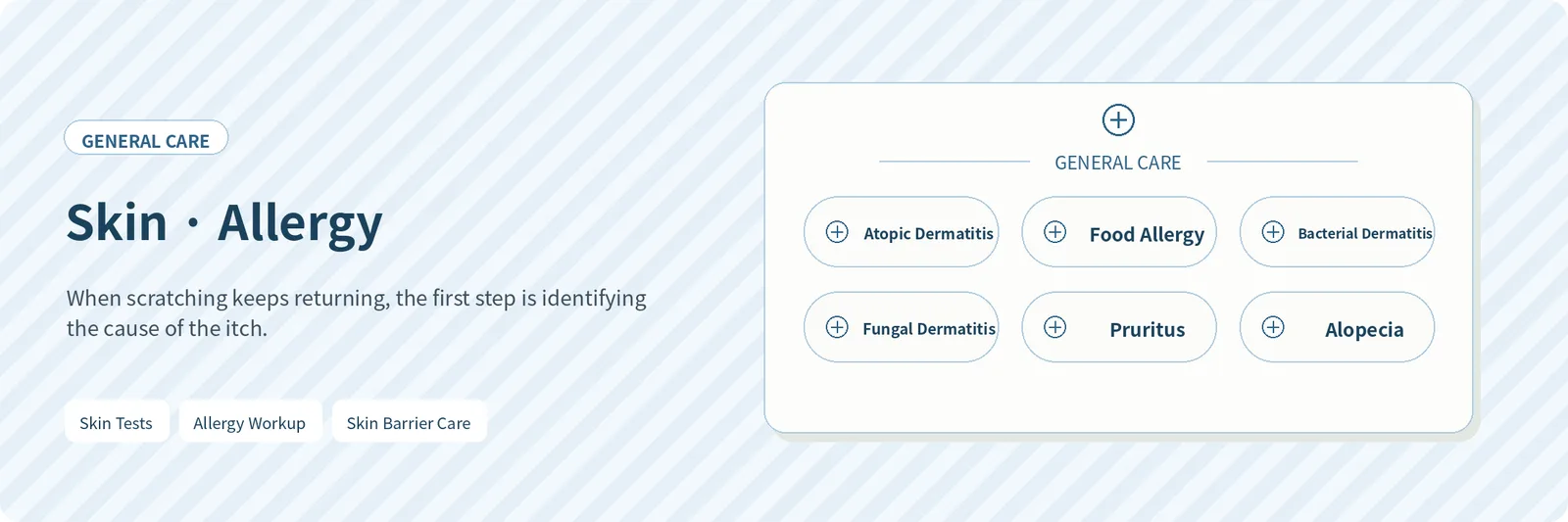
If itchy nights keep coming back, find the cause of the itch first.
Signs to watch for
- Noticeably more scratching or licking
- Red skin with rashes or scabs
- Hair loss in patches with an odor
- Constant paw licking turning the fur brown
- Symptoms worsen when seasons change
What causes it?
Atopy & environmental allergy
A weakened skin barrier over-reacts to everyday triggers. If the skin is a loose fence, pollen and dust mites climb over it easily.
Food allergy
The immune system over-reacts to specific proteins. An elimination diet trial to find the trigger is both the diagnosis and the treatment.
Infectious dermatitis
Bacterial, Malassezia (yeast), and fungal infections amplify the itch. Each needs different treatment, so testing tells them apart.
How we diagnose & treat
- 1
Step 1. History & skin exam
We review when the itching started, where, and whether it is seasonal, and evaluate the skin's condition.
- 2
Step 2. Microscopy & culture
Skin scraping and cytology to identify mites, bacteria, and yeast.
- 3
Step 3. Allergy workup
Elimination diet trials and allergy testing, in stages, as needed.
- 4
Step 4. Treatment & barrier care
Itch-control medication plus medicated shampoo and moisturizing to restore the skin barrier.
- 5
Step 5. Relapse prevention
A long-term plan built around seasonal and environmental factors.
Key conditions
- Atopic dermatitis
- Food allergy
- Pyoderma
- Malassezia dermatitis
- Ringworm (dermatophytosis)
- Seborrheic dermatitis
FAQ
For allergic skin disease the goal is usually control rather than cure. Planning dose reduction together with moisturizing and diet strategy can stretch out the time between flare-ups.
Contact Us
Ask us about these symptoms
10:00 AM – 9:00 PM · Closed Tuesdays (Open weekends)