General Surgery
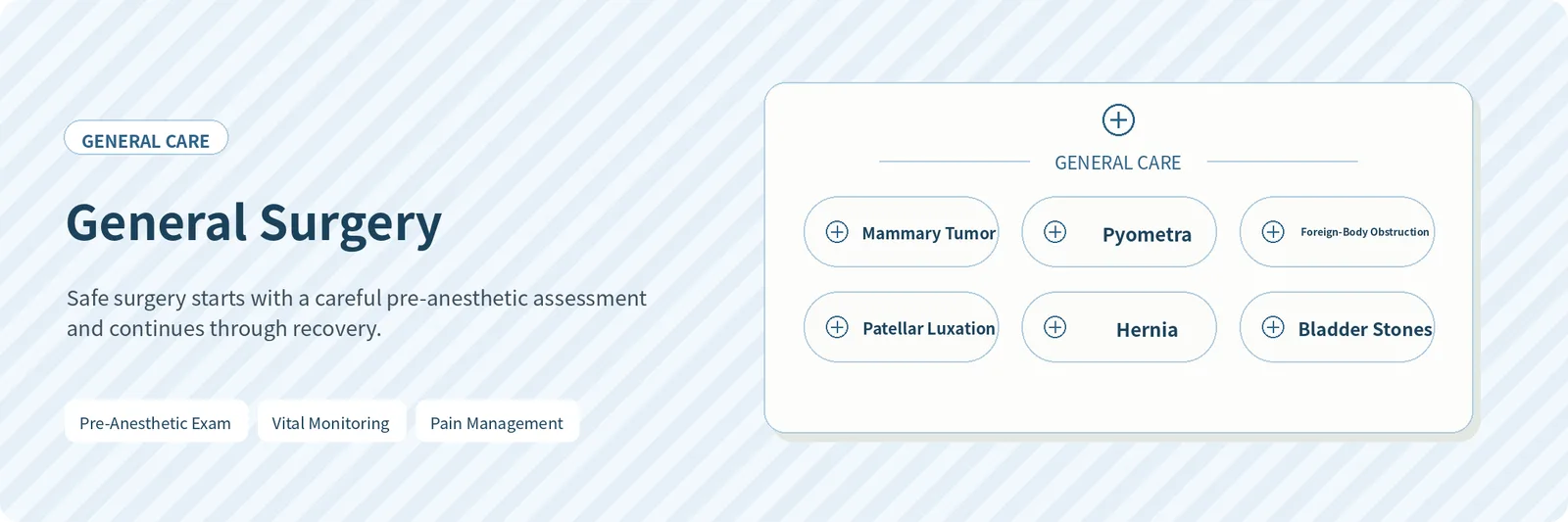
Surgery begins with safety checks. We take responsibility from pre-anesthetic testing through recovery.
Signs to watch for
- Want to discuss the right time for spay/neuter
- A lump can be felt on the skin
- A wound is deep or not healing
- A bulge near the navel or groin (possible hernia)
- My pet may have swallowed a foreign object
What causes it?
Spay & neuter surgery
A key preventive surgery against reproductive disease (pyometra, prostate and testicular disease). Timing and method are tailored to your pet's age and breed.
Tumor (lump) removal
Benign and malignant lumps cannot be distinguished by appearance alone. We identify the lump with cytology first, then decide the extent of removal.
Soft tissue surgery
Hernia repair, bladder and intestinal surgery, wound closure — surgery of tissues other than bone. Pre-surgical testing to lower anesthetic risk always comes first.
How we diagnose & treat
- 1
Step 1. Pre-surgical consultation
We explain the purpose, method, and recovery process, and answer your questions.
- 2
Step 2. Pre-anesthetic testing
Blood tests, plus chest X-ray and cardiac evaluation when needed, to confirm anesthetic fitness.
- 3
Step 3. Surgery & monitoring
Oxygen saturation, blood pressure, and temperature are monitored in real time throughout.
- 4
Step 4. Recovery & pain management
We supervise anesthetic recovery and apply staged pain control.
- 5
Step 5. Aftercare
Wound care and suture removal schedule, plus precautions for home care.
Key procedures
- Spay / neuter
- Mammary tumor removal
- Enterotomy · intestinal anastomosis
- Bladder & urethral stone surgery
- Hernia repair
- Wound closure
- Biopsy
FAQ
Yes. Even a pet who looks healthy may need a different anesthetic plan depending on liver, kidney, and heart status. Testing is the most reliable way to lower anesthetic risk.
Contact Us
Ask us about these symptoms
10:00 AM – 9:00 PM · Closed Tuesdays (Open weekends)