Infection & Parasite Control
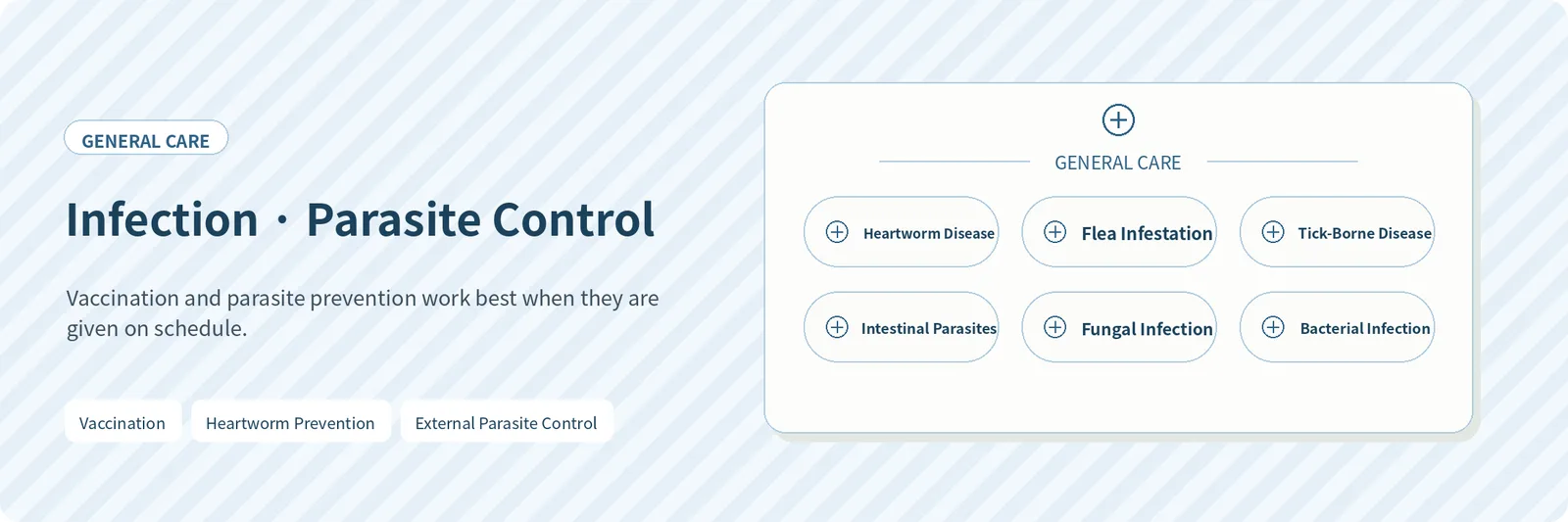
Vaccines and deworming on schedule — prevention is the most effective form of care.
Signs to watch for
- Want to check the vaccination schedule
- Starting heartworm or external parasite prevention
- Diarrhea or vomiting with low energy
- Ticks or fleas are visible on the body
- Acting unwell after contact with another animal
What causes it?
Viral infections
Parvovirus, distemper, and panleukopenia are especially dangerous for the young. Vaccines give the body a rehearsal so it is ready for the real infection.
Heartworm
A mosquito-borne parasite — prevention is far safer and simpler than treatment. We recommend monthly prevention.
External & internal parasites
Ticks and fleas cause skin disease and can transmit other infections. Pets who go on walks need regular prevention in every season.
How we diagnose & treat
- 1
Step 1. Vaccine & deworming history
We review past records and identify anything missing.
- 2
Step 2. Health check
Condition and temperature are checked before vaccination.
- 3
Step 3. Vaccination & prevention
Vaccines and parasite prevention appropriate for the schedule.
- 4
Step 4. Schedule management
We guide the next vaccination and antibody test dates and help with reminders.
Key services
- Core vaccines (DHPPL/FVRCP)
- Rabies vaccine
- Kennel cough vaccine
- Antibody titer test
- Heartworm prevention
- External parasite prevention
- Deworming
FAQ
Considering indoor mosquito activity and how the preventives work, year-round prevention is safest. If prevention was interrupted, we recommend testing for infection before restarting.
Contact Us
Ask us about these symptoms
10:00 AM – 9:00 PM · Closed Tuesdays (Open weekends)